
Photonic Chips: An Ongoing "Lane-Switching" Revolution
source:ICviews
keywords:
Time:2025-11-20
Source: ICviews 11th Nov 2025
China is no latecomer in the field of photonic chips.
The research trajectory of Professor Jin Xianmin — Distinguished Professor of Shanghai Jiao Tong University (SJTU), Cheung Kong Scholar, Director of the Wuxi Photonic Chip Research Institute of SJTU, and CEO of Turing Quantum — is almost a microcosm of China’s photonic chip development from 0 to 1. In 2003, he began to engage in photonic quantum information; in 2010, he shifted his focus to photonic chips; in 2014, he independently built a photonic chip processing platform at SJTU and started small-batch trial production; after officially launching his startup in 2021, he led the team to fully promote engineering implementation. In just three years, he built and commissioned China’s first photonic quantum chip pilot production line in September 2024; by June 2025, this production line had achieved industrial connection with downstream application terminals, truly forming full-chain, independently controllable capabilities covering "design - tape-out - packaging - testing - mass production."
During the Shenzhen Bay Chip Exhibition, Semi-Industry Review interviewed Professor Jin, conducting in-depth exchanges on the progress of the photonic chip track. Jin Xianmin frankly stated: "In the photonic chip race, we are not catching up — we are leading the charge." However, this claim of "leading the charge" was not made lightly, as the real competition has only just begun.
Electronics Approach Their Limits; Light Steps onto the Stage
NVIDIA’s newly released B300 GPU boasts an interconnect bandwidth of up to 8 TB/s, but its power consumption has soared to 1200W. Signal delays within data centers mainly stem from board-level and package-level electrical interconnections, while memory access speeds lag far behind computing units — this is the well-known "memory wall."
Meanwhile, the computing demand for top-tier AI large models doubles every 6.2 months, and training costs are rising exponentially. Over the next decade, global demand for computing power may grow a thousandfold, but Moore’s Law has approached physical limits, and the performance growth curve of electronic chips has significantly flattened.
Jin Xianmin frankly stated: "There is almost no room for alternative iterations of data centers; we have reached a stage where photonic chips are indispensable."
Today, photonic chips are widely recognized as the "next track" in the industry. They can not only support photonic quantum computing but also leverage multiple degrees of freedom of light (such as wavelength, phase, and space) to achieve high-parallelism, low-power classical optical computing. More importantly, they are inherently suitable for high-speed interconnection, solving the bottleneck of data transfer between chips with almost no heat generation and extremely low energy consumption. However, Jin Xianmin emphasized that the future will not be "light replacing electricity" but "optoelectronic integration." He said: "Wherever there are bottlenecks in computing speed, communication bandwidth, or processing capacity, optical computing can fill the gap, ultimately forming an optoelectronic integrated chip system — this will be a long-term trend."
From the perspective of current industrial demand, the application of photonic chips will start with the "most pressing pain points": data connections in computing and data centers. Jin Xianmin mentioned: "Some people say that GPUs will no longer be important in the future, and 'connectivity' will be the core. To efficiently connect computing resources such as CPUs, GPUs, and HBM at the board level, server level, or even cluster level, only light can achieve this." He also noted a high-demand scenario: interstellar communication. For example, SpaceX’s Starlink or China’s equivalent, which requires high-throughput communication between satellites. Currently, inter-satellite links are mostly single-channel or four-channel, with a capacity of only tens of Gbps. To support seamless global connectivity in the future, the communication capacity between each pair of satellites must be upgraded to hundreds of Gbps or even Tbps, and the number of channels must increase from a few to thousands. only photonic chips can carry such flux density. Jin Xianmin said: "In the future, the demand for photonic chips in interstellar internet, based on low-orbit, medium-orbit, and high-orbit satellites, will continue to iterate like CPUs evolving from 386, 486 to 586. As capacity gradually expands, modules will need to be continuously replaced, which will also drive new communication paradigms after 5G."
The First Mover Advantage Is Seized, But the Outcome Remains Uncertain
Technological leadership does not guarantee automatic industrial implementation. Cutting-edge technologies always face a dilemma: frequent laboratory breakthroughs, yet failing to escape the "valley of death" — weak pilot-scale production links from 0 to 1, and broken engineering paths from 1 to 10. Photonic chips are an area that requires even greater efforts to unblock the full industrial chain. They are neither an extension of traditional semiconductors nor pure academic research, but a high degree of synergy between materials, processes, packaging, system integration, and market validation.
Currently, China has built the world’s first photonic chip pilot-scale platform, taking the lead in closing the full-chain technology loop. In September 2024, China’s first photonic chip pilot production line, constructed by the Wuxi Photonic Chip Research Institute of Shanghai Jiao Tong University, was officially commissioned in Wuxi. This platform covers the full closed-loop process of "design — tape-out — packaging — testing," realizing end-to-end connectivity for photonic quantum chips. Since the project was launched in 2021, Jin Xianmin’s team has completed the construction of the pilot line in approximately three years. In June 2025, the first 6-inch thin-film lithium niobate wafer rolled off the production line, further achieving a closed-loop capability from research samples to large-scale mass production. Speaking about the photonic chip track he has been tackling, Jin Xianmin said: "What we are filling is the 'valley of death' from the laboratory to industrialization."
While the development of domestic photonic chips is diverse, most efforts are concentrated at the assembly level. Previously, although foundries such as TSMC, SMIC, and Singapore's AMF possessed partial optical device manufacturing capabilities, they all operated based on electronic chip platforms—neither designed specifically for photonic systems nor offering full-process services to research teams. "Globally, we are the first to build a photonic chip pilot production line," stated Jin Xianmin. Currently, there are two platforms with partial pilot-scale capabilities in the United States and Europe respectively, but neither has fully closed the wafer-level mass production loop for photonic quantum and optical computing. Recently, CHIPX officially launched the Process Design Kit (PDK) for thin-film lithium niobate photonic chips and introduced LightSeek, a full-chain vertical large model for the photonic chip field—marking a crucial step for China's photonic chips from laboratory research to large-scale mass production.
As we all know, the logic of photonic chips is completely different from that of electronic chips. The iron rule that "advanced processes cannot be achieved without EUV" does not hinder the development of the photonic field. based on mature Deep Ultraviolet (DUV) lithography machines, the CHIPX platform has achieved the manufacturing of 7nm-equivalent photonic devices through process innovations such as stacking, packaging, and overlay. "Although the yield rate has decreased, it proves that our process capabilities are strong, and our wisdom and diligence are unquestionable," emphasized Jin Xianmin. "A key point is that the process is not affected." In his view, the core barriers of photonic chips do not lie in equipment, but in the in-depth understanding of complex physical mechanisms and long-term patient process accumulation—areas where Chinese research teams hold distinct advantages.
Despite achieving this "first-mover advantage," Jin Xianmin is not relieved. "Our wisdom, diligence, and engineers' capabilities are not issues," he admitted. "What we truly lack is sustained and stable capital investment, which is needed for systematic breakthroughs. It's like a skilled housewife having rice but not enough to cook a full meal." Currently, CHIPX has established a "minimum viable technical closed loop," but continuous investment is still required in areas such as multi-material system integration and single-equipment stability.
The funding gap is directly widening the industrialization progress. A number of high-valuation enterprises have emerged in the international photonic chip sector: UK-based PsiQuantum completed a $1 billion Series E financing this year, pushing its valuation to $7 billion; Canada's Xanadu has raised a total of $275 million; US-based Ayar Labs, focusing on silicon photonics interconnection, has secured strategic investments from Intel, NVIDIA, and others, with cumulative financing reaching $370 million. In contrast, while domestic photonic chip enterprises are active in financing (e.g., Turing Quantum has raised a total of RMB 800 million, with investors including leading institutions like SMIC), the overall capital support remains insufficient. "Others can pour ten times more money to erase our first-mover advantage," Jin Xianmin frankly stated. "Our capital efficiency is several times higher than that of foreign counterparts, but we can't compete with their 10x or even 20x investment in catching up." The key now is to "make good use of the first-mover advantage." In cutting-edge technological innovation, Chinese universities and research institutions have taken the lead in multiple areas; the CHIPX platform has even achieved the world's first photonic chip pilot line. However, in the industrial transformation phase, if investment intensity and government support fail to keep pace, the development speed will slow down. During the exchange, Professor Jin also expressed his concerns: "Some investment institutions or local governments tend to be conservative about hard technology projects that 'do not generate tax revenue in the short term.' This may cause us to fall behind again in three to four years. Given China's current economic size, the caliber of its scientists, and the existing first-mover advantage, it would be unacceptable to fall behind due to resource shortages. I am not an anxious person, but I hope to convey this anxiety—to the industrial sector, capital community, and government. Because this anxiety is real: 'A person without foresight will inevitably encounter immediate troubles.'"
Dual-Track Advancement: Balancing Cutting-Edge Exploration and Industrial Implementation
Finding a balance between "future potential" and "current output" is a universal challenge for all cutting-edge technology platforms. The CHIPX platform led by Jin Xianmin is precisely such a testbed. As a new-type R&D institution incubated by Shanghai Jiao Tong University, it not only supports technology transfer for university research teams but also meets the commercialization needs of enterprises.
"Children make choices; adults aim for both," he said. In his view, technological exploration and industrial implementation are not mutually exclusive—one must learn to "walk on two legs." On one hand, it supports top-tier scientist teams by providing incubation funds, tape-out services, and even direct participation in R&D refinement, helping laboratory results evolve into standardized processes. On the other hand, it focuses on enterprises with clear directions like Turing Quantum, promoting the "technology-to-product" closed loop and accelerating tangible outcomes. He cited IMEC in Europe as an example: relying on stable government investment for a decade in its early days, IMEC not only became a global technological hub for microelectronics and photonic integration but also attracted research teams and enterprises worldwide (including those from China) to send their chips for tape-out. The core reason IMEC maintains such an ecological niche lies in its long-term strategic perseverance.
Professor Jin also mentioned that Turing Quantum is a product of this "dual-drive model." By steadfastly promoting the integration of research and industry, Turing Quantum has completed five rounds of financing totaling RMB 800 million to date. Jin Xianmin emphasized that choosing the "photonic quantum" track was fortunate. Among global unlisted quantum computing companies, the photonic quantum route ranks first in market value—PsiQuantum with a valuation of $7 billion, followed closely by Turing Quantum. We also observe the increasingly vibrant industrial atmosphere today, with Shenzhen taking the lead in the photonic quantum track. This year, the "3rd Chip Conference & Chip 2024 Top 10 Advances in China's Chip Science Award Ceremony" was held alongside the Shenzhen Bay Chip Exhibition, doubling in scale from the previous edition and drawing such large crowds that even the corridors were packed.
The advantages of photonic quantum lie in: operation at room temperature, compatibility with existing semiconductor equipment, low error rates (task accuracy exceeding 90%), and natural adaptability to AI optimization scenarios. More importantly, the key technologies required for photonic quantum computing—such as ultra-low loss, high bandwidth, and large-scale optical networks—possess strong "spin-off potential." For instance, Turing's computing units can reach hundreds to thousands, far exceeding the 4 channels of traditional optical modules; its broadband regulation capability (covering visible to infrared light) can be directly applied to scenarios such as optical computing CPUs, high-speed modulators, satellite laser communication, and lidar. As Jin Xianmin put it: "We position photonic quantum computing at the top of the pyramid, optical computing as the middle section, and optical connectivity & dedicated chips as the base. These technologies do not overlap by 80%—they are almost fully overlapping. This constitutes an overwhelming competitive edge." For this reason, he firmly believes Turing Quantum has the potential to grow into a trillion-yuan enterprise.
Throughout the exchange, we witnessed Jin Xianmin's unwavering pursuit of cutting-edge technology, his passionate commitment to translating innovative applications into reality, his call for support from the government and investment community, and his appeal for collaboration across the industrial sector.
Jin Xianmin and his team are undertaking a quiet expedition. Light's speed waits for no one, and as we illuminate a new track, we too cannot stand still. Taking the lead is just the beginning; transforming this first-mover advantage into irreversible leadership is the true significance of this expedition.
【Core Engraver】Episode 15: Jin Xianmin — Cheung Kong Scholar, Distinguished Professor of Shanghai Jiao Tong University (SJTU), Director of the Wuxi Photonic Chip Research Institute of SJTU, and CEO of Turing Quantum. As a pioneering scientist in the fields of quantum information and photonic chips, he has delved into cutting-edge technology R&D and industrial transformation, leading his team to break through key photonic chip technologies and drive the integrated innovation of quantum computing and photonic information technology. From the academic laboratory to the industrial frontline, he explores the breakthrough path of hard technology from "0 to 1" with the dual identities of scientist and entrepreneur.
 Lead the Intelligent Welding Revolution: Greater Bay Area AI + Laser Welding Summit
 Splashing 200 Million Yuan! Three Industry Giants Boost Investment in the Laser Track
 Two New Companies Established! Han's Ecosystem Further Expands
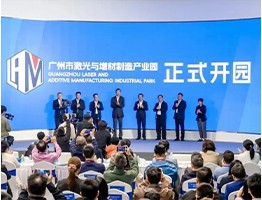 Multi-Sector Flourish! Five Major Laser Parks Rise Rapidly
 The Grand Finale is Here! Three Major Laser Headquarters Base Projects Topped Out
 Intelligent Scientific Systems: Leading Domestic Ultrafast Imaging, Redefining Visual Perception
 From Rural Girl to Laser Helmsman: Fu Chunhua's Light-Chasing Journey
 Scanner Optics: Galvanometer Tech Leader
 The "Light Chasers" in the Deep Ultraviolet World
 Shi Lei (Hipa Tech): Focus on Domestic Substitution, Future Layout in High-End Laser Micromachining